
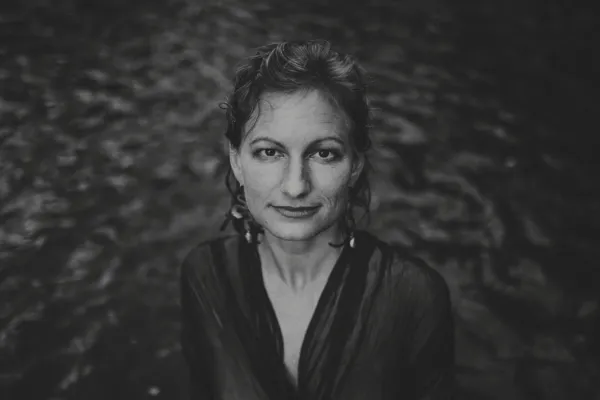
The Dark Mother
A recent phone call with my daughter has nudged something awake in me — something from the darker seasons of my mothering.
She mentioned that my social media posts make it look like my life is “perfect.”
In the moment, I chuckled, because she wasn’t wrong.
What I share isn’t a facade — in many ways, my life is better than what I post.
It truly feels like heaven on earth: time wealth, spiritual wealth, relational wealth, and financial ease.
Life at the pace of peace.
Creative projects that move as slowly or swiftly as I want.
Spacious mornings with tea and my journal by the fire.
Music playing, candles lit.
Money for what I need and desire.
A home I love, overlooking natural beauty.
And a husband/Beloved who cherishes me with a depth my younger self could not have imagined.
But her words ultimately brought up darker days.
Times of desperation.
Ways of Being that siphoned my nature and my aliveness.
Choices made that hurt my children.
Memories began to arise again, but not with the old guilt or shame.
(Those two characters have had their fuck-with-me era, but no more.)
After the phone call with my daughter, I felt a simple soul mission arising:
It is time to share another part of my story.
After all, this is a part of my Love Story too.
So, this is a clear-eyed look into some of my personal, hand-crafted hell-realms.
Created by a woman who discounted her knowing, her intuition, and her felt sense.
And I say now:
A woman not in connection with her own gnosis —
Her intuition, her peace, her power, her worth —
Is dangerous to her children and her union.
May my open acknowledgement of the ways I allowed chaos into my family serve as a vehicle for differentiation for someone reading, because with differentiation comes choice.
This is no longer my reality, and still, the retelling matters.
“If you wanna get to heaven, ya gotta raise a little hell.”
Part 1: The Danger of a Woman Disconnected From Herself
Let me begin by saying, I was not dangerous in the ways we usually imagine of a “bad mother” —
I was not cruel, malicious, or intentionally destructive. I love my children devotedly and took on the task of motherhood with such joy, such a thrill, and such a passion.
But as I interacted with life elements that tested my preconceived notions of what it meant to be a woman, wife, mother ... and acted from rote and model, rather than inner knowing ... I came up very short.
I was dangerous in the subtler, more insidious ways that come forth when a woman is no longer in communion with awareness of her truest nature.
When she is in survival mode, instead of a differentiated choice.
I see now that the harm I participated in did not come from evil.
It came from absence — an absence of self, of voice, of presence, of boundaries, of trust in my own internal compass.
It came from being an “unchosen woman” inside my own life — doing what was required, expected, praised, or spiritually sanctioned, rather than what was FUCKING TRUE.
It came from over-functioning in ways I believed were noble, and under-feeling in ways I thought were necessary.
It came from not having contact with the unfuckable, unflinching wisdom of my own I AM — and from allowing outside influences, teachings, hierarchies, and even beautiful-sounding philosophies to override my gnosis — and, in the process, I became blind to the clear signals rising inside me.
And when that happens inside a family system, it creates wreckage — even if the woman herself is devoted, well-intentioned, and striving with everything she has to be “good.”
The danger is not who she is.
The danger is who she is not allowed to be and how she shuts herself down.
This is the heart of what I want to say:
The darkness in my story was not born of malice. It was born of disconnection — from the deepest source of a woman’s wisdom, her womb, and her I AM presence and soul.
Part 2 — Dislocation & Disorientation (2009–2011)
In February 2009, my husband and I, along with our four young kids, left our hometown of Traverse City, Michigan — with our home unsold and another one being remodeled on the other end, in New Haven, Connecticut.
We left the idyllic country home next door to my parents, the familiar rhythms of family and friends, and the safety of "life as we knew it."
It looked like "following God," following intuition as I understood it then, making brave choices, and saying yes to the unknown.
But before I tell the story of where we went, I want to pause here and tell the truth about where we began.
Because years later, in a season of deep personal reckoning — sitting with the full weight of my journals, my memories, and the letters he had written me as a young man — I saw the origins of our marriage differently than I ever had before.
I saw a young man who had not been told he was loved — until I said it. He wrote to me that he was still shaking hours later. Shaking. Not because the words were new from me — but because they were new, period. He had lived eighteen years without that landing in him.
In this reckoning, I sat with that for a long time.
And then I sat with the harder thing.
What I came to understand — letting more of my "good woman" image die — is that at the tender ages of sixteen and seventeen years old, I had used my feminine power unconsciously to get what I wanted, which was marriage and children. Not with malice. Not overtly. But the energy of withholding, of virginity wielded as currency, of girlhood-as-promise — it was there. And it worked, in the way that unconscious feminine power works, powerfully and subtly.
The honest truth is that our dreams were not aligned. A wiser version of me — the version I was still decades away from becoming — would have seen that clearly and had the courage to name it. Instead, I acted from fear and scarcity. I did not fight for his dreams. I did not even see them as something worth fighting for, because I was so oriented around my own. And he, a young man starved for belonging and love, folded his future into mine.
Let me be clear ... I am not negating his sovereign choice in the matter. I am simply owning what is mine to own.
He came to our marriage, and to our family, a young man raised in the grip of a controlling religious world, where warmth and belonging were conditional — and my family became his family in every sense. He fell in love with my parents, our family. On some level, I think I was the best route to belonging in a world he wanted to be a part of.
Which means that this decision to move — to leave Traverse City, to sever ties with my parents over business, to uproot everything — was not just a loss for me.
It was a different kind of devastation for him entirely.
My parents had become his parents. My father, his father in business. And yet we left together, two people making the only choice grief would allow us at the time
I thought we were "leaving and cleaving." I think for him, a large part of what made our marriage make sense was dying.
That is as far as I will go in making assumptions about him. This is my story, not his. But I wanted to honor the truth of his beginning in this — because to tell the story of our unraveling without first acknowledging the tenderness and the fractures in the foundation is to tell only part of the truth.
Our family of six moved into a renovated home on the edge of "the hood" in New Haven, Connecticut, where we suddenly became the minority... It was abrasive.
Jarring to our young “country” kids to be in the urban jungle and live worried about being shoved around by neighbor kids.
A year and a half of financial-strain-then-relief later, both our Michigan and Connecticut homes had been sold, and we left New Haven for Indiana to prepare for a life on the road in an Airstream.
We were financially “clear” with savings in the bank.
We were also exhausted and untethered.
We carried a version of hope that arises in people desperate for change and that looks like adventure.
We lived in that Airstream for a year. And it WAS fun and adventurous.
Traveling the western half of the country, visiting national parks, and WWOOFing on farms.
But also —
Living off the savings from the sweat equity of our 20s.
Raising and schooling four children in 289 square feet.
Starting the GAPS protocol together as a family, which shifted so much in me, but also added the weight of “everyone eating the optimal way” onto already weary shoulders.
As we began to close out the year in the Airstream, the strain quietly grew as we contemplated our next move to Vermont, and a new career path for me in functional nutritional therapy and the GAPS Protocol. We finished up the "Airstream year" living next to my husband's brother, where he was the general contractor and builder of his brother's new house.
My journal from August 11, 2011, reads:
"Now that the initial excitement of 'decision making' has worn off, I am scared to death.
It is so scary to do something different… to leave close proximity to family and known friends, to create our own livelihood from thin air.
What the hell are we doing?
Are we brave or just plain stupid?
I don't want to wake up every morning feeling like this."
Amongst prayers for my husband, my struggling parents, my kids, and others, I wrote:
"Please help us to thrive.
Help us not be stressed.
Give me patience and calm gentleness."
"My resolve has been weak over the last week. It was a tough week — 1st week of homeschooling… was very challenging, Nate's workload is heavy getting ready for framing inspection and I was trying to squeeze studying around my already demanding week. Nate and I were short with each other … & life in general was not fun."
I called my resolve weak.
I was carrying the emotional load of the family, pleading with God not just on behalf of myself but for my parents, my brother, my children, my husband — everyone but me.
By September 2011, still in Indiana, studying to become a nutritional therapist while homeschooling four children in an RV, I wrote:
“We feel that our future livelihood, in small part or big, depends on my efforts at this nutritional program.
We are doing something entirely new… and it is scary as hell.
Nate needs my help to create income…
I ask for courage to keep going.
I ask for wisdom and discipline to manage my time well.
May I not snap at the kids, but instead increase my capacity for the load at hand.
May I keep nourishing our bodies through this time.
God help us to sort the details of the next two months in a way that is not unduly stressful.”
Always discipline, and endurance.
Always “help me do more” — never “help me feel.”
This was the steady, ongoing dislocation of my inner compass and fixing a situation from the wrong direction.
At the end of 2011, we moved to Vermont.
No friends. No family.
Two fledgling businesses.
Four kids.
Isolation.
Funds for a new start, dwindling.
Exhaustion wrapped into every choice.
We housesat for six months, then moved rentals year after year, until we finally found our “Vermont dream home.”
But even that dream was built on foundations of strain — chronic over-responsibility on my part, and emotional collapse on his.
I thought I was doing what needed to be done.
Part 3 — Over-Responsibility & the Collapse of Intuition (2011–2014)
By the time we were fully settled in Vermont, a pattern had taken over my life:
I had put myself in a position of holding everything.
The finances of both our businesses and household.
The emotional weather.
The “rightness” of our choices.
The health of the children.
The stability of the home.
The future of the family.
And most dangerously — I was holding all of it in isolation, inside a system where I was already depleted.
My journals from these years read like someone trying to tread water with a mountain tied to her ankles. Occasionally, I started to see that I couldn’t hold it all.
In September 2012, I wrote to my husband:
“I hate talking to you right now.
It used to be I liked nothing more than time to talk to you…
I need all the positive energy I can get, I need to have ideas & create but instead all that energy is sucked down the drain by xyz conversation.
We can make it through this tough time but not if I am the only one you talk out your fears, frustration & depression to. That kills my love a little more each time. FUCK. I don’t want to feel this way.”
I didn’t have the language then, but I was naming emotional enmeshment and codependency.
The kind where one partner offloads their unprocessed pain, and the other becomes the container, the sounding board, the shock absorber.
I was running a household, homeschooling kids, building a business from scratch, feeding the family from scratch, trying to “create our own livelihood from thin air,” and often carrying the emotional world of a man who was drowning.
And because I had no relationship with my own boundaries or intuition, I thought this was love and union.
And underneath all of that doing, there was something I couldn't see clearly then:
That by stepping in to fix, to build, to carry — I was also robbing him of the chance to rise. Every time I filled the space, I left less room for him to find his own footing. It wasn't malicious. It was just what I knew. But the emasculating impact was the same.
What my now-self would say to my younger self — the liberating, truthful thing — is this: I cannot be with a man who is wholly unsatisfied with his work and his livelihood.
Had I been able to say that clearly, once I understood it was a core fracture for us, the chips could have fallen where they may. He would have either found a more meaningful path for himself, or we could have ended things sooner — less painfully drawn out over years.
Instead I managed. I compensated. And in doing so, I participated in a slow, mutual diminishment neither of us intended.
By February 2013, the journal entries had a new flavor:
Awareness of what this way of living was ultimately doing to my marriage.
“Feeling sick to my stomach right now, God.
The stress of finances and making it in a new place has been a corrosive disease, eating away at the fiber of our love.
Nathan has given me the impression that counseling is not a priority, when he might get this project that will keep him away for weeks. Either way I feel like we lose — when Nathan is home it’s a ticking timer to when he goes another round at being depressed and “losing it” and then coming back to me and the kids as our loving husband and father. Or there is him being gone and our family split up.”
“God, help us. I need someone to talk to.”
I can remember the loneliness in these words.
A woman living with her husband, raising four children side by side with him, yet with no one — not one person — who could hold the truth of her interior world.
There is a particular danger for women raised in systems of duty, goodwill, spiritual obedience, and chronic high-functioning:
We learn from our mothers that self-erasure is the price of love.
We assume silence is the price of keeping the peace.
We assume endurance is the cost of stability.
And slowly, quietly, the intuition that is generative and life-giving — the peace in our hearts and the care of our soul, our felt sense — collapses under the weight of all we refuse to feel.
By July 2013, living in another rental, working nonstop on business and course creation, navigating mold in the basement, overwhelmed with the children’s needs, exhausted by bills, I wrote of the desire to be a “relaxed, available mom,” and how I loved “everything about our life in Ripton, VT, everything but paying for it.”
Later, in July 2014, an entry from the new dream house:
“God, this house is fantastic…
Help our businesses thrive so we can afford it…
Help me overcome resistance…
Help me be mindful of taking care of my own children and husband before I take on the world.”
Even in beauty, I was overwhelmed.
Even in gratitude, I was pleading.
But this line…
“I ask for help in connecting with Nathan again, on a new & deeper level.
We’ve just come through an incredibly stressful time…
I desire something new & fresh.”
I was asking for intimacy from within a dynamic where I was no longer the wife
—I was the regulator, the stabilizer, the mother of the family system.
And the cost of that role follows this sequence:
You lose your intuition first.
You lose yourself second.
Your marriage collapses last.
This was the era when I stopped being feel-able.
When I became the “dangerous mother” — not because I was cruel, but because I was numb.
A woman who cannot feel her inner voice is a woman who will follow any voice but her own.
This part ends with tenderness, not condemnation.
Because I see now:
I was doing the best I knew with the tools I had.
I was living from the template I had inherited.
And I had a damn, stubborn tenacity to keep going even when it felt so hard.
And I still had sparks of creativity and humor…
A Friday Bath Poem
“I’m locked in my bathroom
In freshly scrubbed tub
After bathing smelly puppy
With my biggest Bub
I’m tired and weary,
My nerves are near shot
4 kids, cat and pup
House and biz, ain’t so hot
All manner of requests,
Bodily secretions and whines
Lay a feast of assault
On which I must dine
I eat this meal of motherhood
At 3 in the morning
Or at 6am…
There’s not so much warning
What grinds me the most
Is that my manners need help
Sometimes when I wipe
That peed on toilet, I let out a yelp
I’d just like a few days
On a remote island, with service
So I can come back and
Do “this” with less of a squirmish
But for now I’ll be quiet
In my lavender tubs
Let some steam off with headphones
And then hug on the bubs
Sigh…”
Part 4 — The Fraying: When My Marriage Began to Erode and My Nervous System Caved (2014–2016)
By 2014, the strain in my life had shifted from circumstantial to structural.
The foundations were weakening.
And even though we had finally moved into our dream home — the one with the two ponds and the 3 acres and the rural Vermont quiet where the kids could walk to school — all of which we loved — I was stretched so thin on the inside.
My journals from this time read like dispatches from a woman trying to keep a family, a marriage, a business, and herself from collapsing.
In December 2015, I wrote:
“Why am I sad? Why did I wake up sad?”
I went on to describe two “good nights” — dinner with friends, our kids laughing after some emotional release and truth talk with both their dad and me, the lightness after deciding for my husband to end concrete work, the sweetness of good food and a little wine.
And then:
“Today though.
I haven’t connected with my husband in the aftermath and I feel a sense of weariness and frustration on his part…I know he is doubting his decisions again.”“It’s all too much… work, decisions, re-doing the client’s countertops, Christmas. I don’t like being the one looking deeper for strength… while he is mostly numbing, barely existing.”
This was the pattern:
Moments of light, immediately eclipsed by emotional disconnection; glimmers of warmth, swallowed by resentment, overwhelm, and confusion.
Later that same afternoon, I wrote one of the truest entries of that era:
“I am so lost.
The thoughts that turn over and over in my head — heart, chest, gut — they feel like choking in my throat.
I love my husband. I hate my husband.
We have a plan… then the next day — or the next hour — everything is up for grabs again…
I’m so tired of the hurt in my heart, the sob caught in my throat, and the words not said aloud that would be hurtful to an already hurting man.”
I was living inside contradictions that made me feel unmoored:
wanting stability and wanting escape,
wanting to support him and resenting the endless support,
wanting closeness and feeling swallowed by his pain.
By January 2016, the emotional burden had become so heavy that something in me cracked.
I had an unprecedented day of mama mutiny — staying in bed all day, unable to force myself upright.
From bed I wrote:
“I have a lot of power in my hands.
I can make life hell. I can make life tolerable. Or I can make life wonderful.
All this is within my grasp as the mother and wife in this household.
I’m thinking a lot of thoughts… as I haven’t gotten out of bed today.
I went to bed by myself last night — dull and tired and heartsick from another altercation with Nathan.”
The “altercation” I wrote about was over something small — and not small.
We had friends over for a beautiful dinner I had cooked, planned, and hosted with love.
And after they left, he turned on me.
He berated me on the choice of dinner, and accused me of “showing off.”
I remember writing how hurt I was, how angry I felt, how tired I was of being spoken to in ways that were demeaning, dismissive, or cutting.
But even more than the words, I remember the pattern — the way I would immediately begin to question myself:
Did I misjudge the moment?
Was the meal too much?
Did I somehow provoke this?
Should I have done it differently?
It was the same pattern that had shown up years earlier when he asked me to stop breastfeeding our second son because it took too much of my time during a busy season for him.
Moments where normal, healthy, intuitive maternal choices became something I self-doubted or felt I needed to defend.
This dinner was another one of those moments — another place where his anger made me shrink, doubt myself, and override my natural instincts.
And I see now how often I internalized the blame, how reflexively I took on responsibility for his discomfort, and how deeply I believed I was supposed to adjust myself to avoid triggering his frustration.
I don’t blame him.
It is mine to own how I responded to him. I had no skill or mastery in holding myself. He was the perfect mirror for my interior world.
And that January day in bed was the beginning of my fracture — the moment when my body refused to keep absorbing what my intuition had been screaming for years.
But I had a couple more years to go before I began to understand how to hold myself.
By February 2016, the duality of my life was almost too much to hold. I wrote from the bathtub:
“Life couldn’t be more desperate or more hopeful at the same time.”
“We have a deadline — the planned death of MergeCrete by mid-June. Meanwhile, we have increased our cost of living.”
“I want to feel free and light… to have enough money to not stress… to be uncaged and happy with the kids… to have memories and experiences.”
A few months later in May 2016:
“Tonight I write as a heartbroken woman. I’m weary of the struggle, I’m weary of the underlying “strain” between Nathan and I…the fragility but tenacity of our love. It grows thin, it frays, it runs deep, it gets a breath, it gets knocked down, wind knocked out ... it just wants to lay on the floor and stare at the wall.
God, helpful Ancestors, I want my husband to fall in love with me. The 36-year old me, because the 18-year old me is only faintly represented. He is an all-or-nothing guy and right now, in his mind, there is no room for romance. And theoretically there isn’t. But I’m dying on the vine and so is he and I think that if we had love, tender love, between us, we could bear these burdens better. That is of benefit to everyone. That is of benefit to us, to our kids, to our friends…
Please. Help my husband to take small steps back to loving me…”
I was pleading to be loved as the woman I had become, while living in a marriage that only knew how to hold the girl I used to be.
And that shift — the return of desire, a little bit of absolute honesty with myself — was the beginning of the end.
I remember, around this time, finding a potential teacher to learn about myself and my pleasure as a woman — Mama Gena — and my husband clearly said that if I went in that direction, it would lead to the end of our marriage.
He was absolutely right. I’m pretty sure that had I been put in touch with the truth of my pussy, my womb, and my woman — honesty about our marriage may have come much sooner.
But I chose for the marriage and continued to live in emotional whiplash — pulled between devotion and resentment, hope and despair, duty and truth. I also decided to lean in the direction my husband wanted me to go, that of Orphan Wisdom School and the teachings of Stephen Jenkinson.
Part 5 — The Desperate Years & a Setup For Spiritual Entanglement (2016–2017)
By mid-2016, the strain in our home was a wound.
A widening tear in the fabric of our family that no amount of endurance, prayer, or grit could hold together.
My journals from these months are some of the most painful to reread.
On July 7, 2016, I wrote:
“Tonight I am scared.”
Then the whole truth spilled out of me:
“Scared because we’re losing our 16-year-old son…
Scared because becoming the breadwinner is more and more a possibility…
Scared because my boy Jack is in the wilds of Canada…
Scared because my girls are growing up so fast…
Scared because I’m not sure I’m behaving, thinking, or knowing anything ‘right’…”
It’s all there.
Every axis of pressure — finances, children, marriage, identity, intuition — converging at once.
This was the point where I entered what I call the entanglement years:
A mixture of spiritual sincerity, emotional exhaustion, desperate longing for meaning, and the seductive pull of philosophies that gave language to my pain but didn’t offer the grounded support I actually needed.
I was involved in the Orphan Wisdom community at that point, attending teachings that centered on grief, heartbreak, ancestral burden, history, etymology, and the romance of descent.
Beautiful concepts — but I was receiving them at a time when I was personally collapsing, spiritually porous, and primed to take on more weight instead of less.
And the impact was immediately evident in my home.
The same July entry continues:
“Scared of pressing into OWS and learning how to not DO, but instead GRIEVE.”
“Scared that I’m screwing up my kids and there is no REAL change I can make.”
“Scared that my husband self-sabotages, and doesn’t love me the way he used to.”
I was grieving, but without support.
I was spiritually open, without boundaries.
I was absorbing everyone’s suffering — mine, my husband’s, my children’s — without having the stability or clarity to metabolize it.
And my intuition — the very thing that could have guided me — was nearly gone.
By early 2017, the exhaustion had become its own kind of fog.
On January 12, 2017, I wrote:
“Heartsick, befuddled, grieving, hurt, paralyzed, despairing of ever being happily married again.”“Must pull it ‘together’ to sustain the activities that keep money coming in… but really…”
It trails off.
Even in writing, I couldn’t complete the thought.
This was the exact place where a woman’s intuition should be loudest —
But mine was a faint whisper under layers of obligation, spiritual over-identification, and the internalized belief that self-sacrifice was noble.
Looking back now, I have so much tenderness for her — the woman I was.
She wasn’t weak or uncommitted.
She wasn’t brazenly careless.
She was depleted.
She was isolated.
She was spiritually overloaded.
She was emotionally responsible for too many lives.
And she had no clean mirror to hold up to herself — no one who said:
“Melanie. Enough.
You’re drowning.
And you’re allowed to stop.”
Instead, I wrote to God, to Jesus, to the Universe, to the Ancestors —
pleading for direction, pleading for relief, pleading for any kind of clarity.
I was looking for anything outside of me for rescue, when the ‘life ring’ was inside my own system, my own NO, my own “I can not, I WILL NOT live like this anymore."
At this time, I truly lost my own knowing.
Not because I didn’t have intuition — but because I was in a life where acting on it felt catastrophic.
This was the threshold before the end — the winter before dismantling.
And as painful as these years were, they set the stage for the rupture that would set me free.
Part 6 — The Breaking: The Canadian Winter, the Rupture, and the Sentence That Ended My Marriage (2017–2018)
I don’t know if anything can fully prepare a woman for the season when her marriage breaks, her family unravels, and she realizes she has abandoned herself for so long that she no longer recognizes her own knowing.
By the summer of 2017, everything in our world was unstable.
We had sold our beautiful Vermont home, the one with the ponds and the quiet and the promise of longevity and roots. We bounced from place to place for a couple of months as we waited to have our “Canadian adventure” on the Orphan Wisdom farm — and had school boards disputing who would pay for our kids’ schooling since we no longer had our permanent residence but were still in Vermont.
My kids were unsettled.
Their schooling was disrupted.
Their friendships were interrupted.
Their sense of home evaporated.
And yet, I didn’t yet have the clarity or courage to call it what it was: the slow, painful ending of a marriage.
In June 2017, I wrote:
“My family and I sit on the edge of an ending…
We officially listed this beautiful place… we got an offer…
We are jumping off the cliffs of the KNOWN — 1,001 luxuries of the settled life:
A mailing address
A business location
Where we sleep at night
Who our mechanic, accountant & doctor are
Where the salamanders float, the peepers peep, and the Grandfather tree stands
Where my son will finish high school
Where people might gather…
It’s an end to what we hold dear — the idyllic Vermont life, and the exchange is no guarantee of being better.”
I was cataloguing the collapse of a life.
Not just a home — a whole ecosystem.
Then came the Canadian winter.
A winter, I still shudder a bit when I think about it, frankly.
A winter focused on matrimony (preparing for a friend's wedding) while ours was hemorrhaging.
We went seeking community, ritual, meaning, purpose.
And found moments of beauty, yes — but also the most destabilizing season our family had ever known.
I wrote:
“This winter had some beautiful moments, but mostly it was hellish.”
My oldest son was on his own in Vermont for his senior year, living with friends, when he got mono and had a massive herpes outbreak across his face.
He was ill, alone, and overwhelmed.
My second son thrived in the ceremonial farm life — the one bright spot.
He felt purpose, belonging, and structure.
But my girls…my girls were unraveling.
They hated the isolation, the adult-centric ceremonial nights where kids were expected to be silent or useful, with high expectations around language and ancestral behavior.
And they were absorbing the grief and confusion radiating from both their dad and me.
There is one moment my daughter describes as a low point:
She was carrying her little sister home in the dark after another “ceremonial dinner.”
Little sister, exhausted and unhappy,
Big sister shouldering a responsibility she should never have had to hold.
Some buried part of me knew my daughters were struggling. Still, I was too numb and desperate to do differently, other than gather our family and run to Oaxaca, Mexico, for six weeks.
The truth is:
I abandoned my intuition there.
I dismissed the cues that my children were suffering.
I listened to philosophies, above my own knowing.
I handed over my maternal authority to systems, elders, ideas, and ceremonies that were not built for my family — nor for the fragility of our marriage.
And then came the end.
At the end of that winter, after an intense 4-day sit-out and ceremonial wedding, we left Canada, returned to Vermont, and moved into a condo.
Our oldest son came back to live with us.
We were fragile, fragmented, and pretending to be “starting again.”
On May 10, 2018, Nathan and I sat across from each other at a restaurant in Waitsfield, VT.
I had a list of things that needed to change.
I was ready to negotiate a life I was still trying to keep alive.
And then he said the sentence that broke the fuckery of the illusion we were trying to maintain:
“I wonder if I ever loved you.”
He didn’t say it with malice. He said it with honesty.
Everything in my body went still.
Hot tears started to course down my cheeks because I knew it to be true.
I did not feel any rage. Heartbreak, yes. I would find myself in the fetal position more than once in the days after.
But this was the truth.
What followed was some of the usual chaos:
-a separation,
-a brief emotional affair,
-a 6-month ‘marriage 2.0.’
-legal divorce,
-Covid co-housing hell,
-dates with men for the first time,
-sorting out how to pay for my own household (and succeeding)
-logistical nightmares,
-emotional fallout,
-and lots of unlearning, and remembering.
But here is a lingering piece:
That Canadian winter is the part my daughters still hold pain around.
And I understand why.
Because I abandoned myself and them ... the most there.
And when a mother so deeply abandons herself, she leaves her children without their landing place.
It was a wound to my children.
And yet —
It was the only thing painful enough, undeniable enough, to break the spell of the illusion and force me back into my own knowing.
The end of my marriage —
and the remembrance that followed —
is what returned me to myself,
-to my worth,
-to my divinity,
-to my own precious, sanctified, beloved Melanie heart.
I love her so very much. 😭
It taught me that I will never again override my intuition.
It is what taught me how to create a life that feels like heaven on earth.
It is what restored my inner authority and made me the woman I am today.
I am a high-level designer for my soul’s growth.
Both in the fuckery — and the mastery.
I am a woman who is loved — by herself, first and foremost. I am so precious — to me. First.
And by the man who now stands at my side in deep cherishing of my heart.
Part 7 — The Redemption: The Woman I Became When I Finally Returned to Myself
After everything fell apart —
I found her.
The part of me I had exiled while trying to be perfect, righteous, dutiful, devoted, spiritually obedient, and endlessly available.
The part of me I had silenced with endurance and religion and responsibility and “right living.”
I feel my worth now — not as a moral performance, but as an inherent fact.
My intuition is fully online — not as a ghost, but as a steady companion.
I make choices from inner command, not fear.
I build my life on remembering myself as an emanation of Creator/Source, not on striving.
I now explicitly trust my deepest self.
And as I elevated my own worth, everything around me elevated in response.
The way I treat myself changed.
The way I parent has changed.
The way I allow others to treat me has changed.
The way I love — and am loved — has changed.
The standard for everything in my life has risen to meet the standard I now hold within myself.
I did not become free and happy because something external saved me.
I became free and happy because I stopped abandoning myself.
The dark mother in me — the one who wandered, who over-functioned, who sacrificed, who tolerated chaos, who moved her children across states and countries while losing her center — she wasn’t evil.
She was disconnected.
And the redemption came not from rejecting her, but from integrating her.
Holding her.
Witnessing her.
Understanding her.
And holding the cherishing of her heart as the highest standard.
This is why my life feels like heaven on earth now.
Not because it is perfect.
But because I am no longer divided inside myself.
I live in a home I love.
I sit by the fire with soft music and candles.
I write from a calm nervous system.
I mother from intuition, not fear.
I move through the world with clarity, softness, and power.
And I share my life with a husband who loves me in a way that honors the woman I have become — because I love me that way first.
The redemption was never about the marriage ending.
It was about me beginning.
Beginning to live from the deep, feminine intelligence that had been inside me all along.
And this — this remembering — is what allows me to share the dark parts of my story now without shame, without collapse, without apology.
Because the woman who lived those years is not the woman writing this now.
She is fully mine.
Fully loved, fully integrated, fully redeemed.
Part 8 — The Closing Benediction: For the Women Still in Their Dark Seasons
When my daughter told me that my life online looks “perfect,” she wasn’t wrong.
From the outside, it probably does.
But I want her — and my other children — to know the truth beneath that beauty:
Heaven-on-earth was not handed to me.
I crafted it from the ashes of every place where I once abandoned myself.
I built it by walking through years of holding the opposite pole — confusion, numbness, over-functioning, disconnection, bravery that was actually fear, spiritual entanglement, financial strain, emotional collapse, and the unraveling of a marriage that could not sustain the woman I was becoming.
I built it by facing the mother I had been and refusing to exile any part of her.
I built it by turning toward the I AM within me —
the voice I once silenced in the name of righteousness, duty, and survival —
and letting her become the center of my life.
This is the real story behind my “perfect” life:
It is not perfect.
It is aligned.
It is chosen.
It is sovereign.
It is felt.
It is mine.
And that is why it shines.
So this is my benediction —
For myself,
For my daughters,
For any woman reading this who still feels lost inside a life she once hoped would save her:
May your highest authority be the peace in your heart and the care of your soul.
May all decisions, choices and actions be movements from that place.
May you trust your own intuition more than any system, any philosophy, any authority, any elder, any voice outside yourself.
May you forgive the woman you were and love the woman you are becoming.
May your dark seasons be your classroom, not your prison.
May your mistakes be thresholds, not damning verdicts.
May you reclaim your I AM —
The soul-companion, the inner guidance you were born with —
And may you never again hand over your authority to anything that cannot cherish your heart.
This is the legacy I leave to my daughters:
Not a perfect mama.
A mama who has claimed that the cycle of self-abandonment stops with her and she will say it out loud, whether it’s comfortable or not.
So it is.

